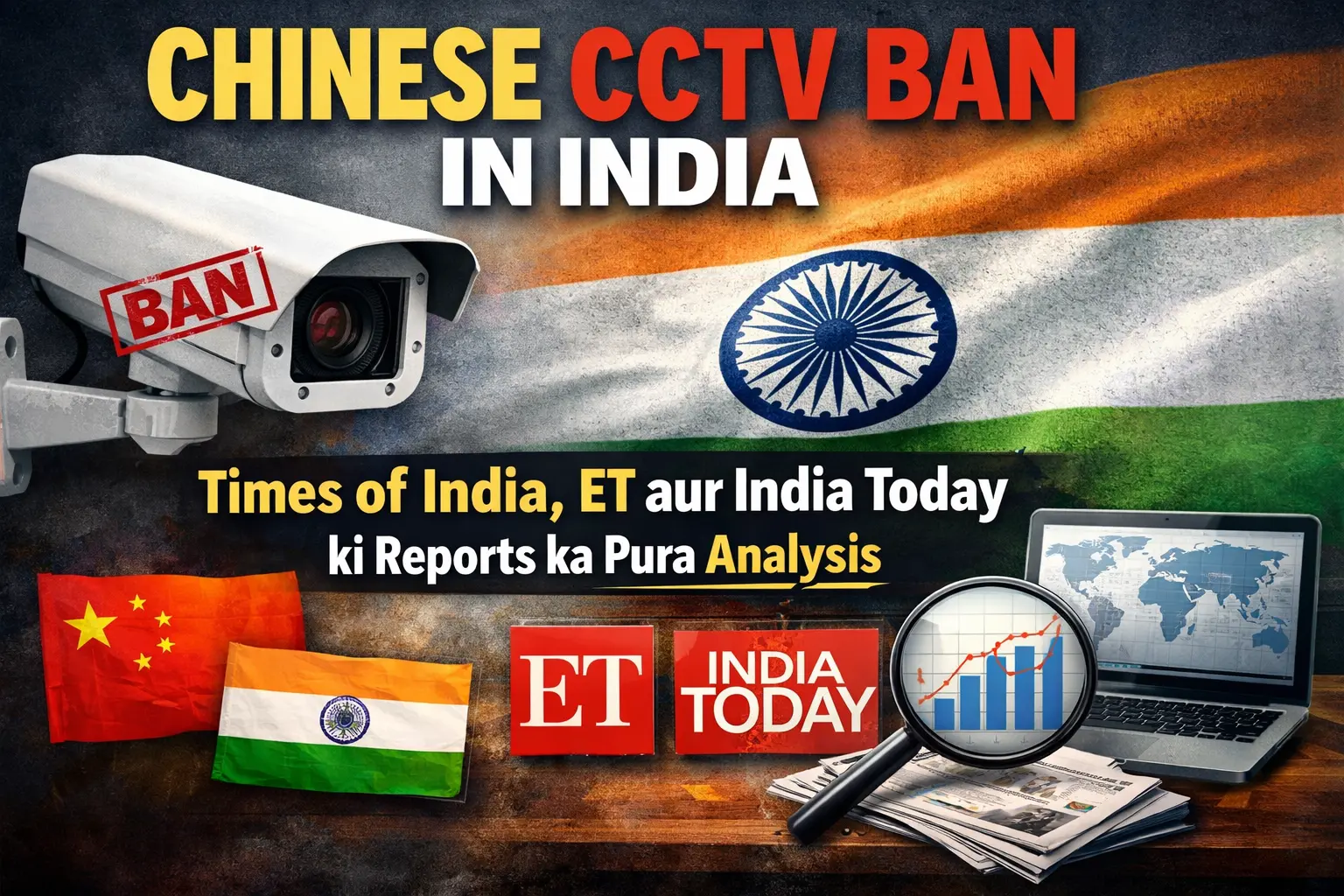
In a significant move to bolster national security, the Government of India is set to tighten the noose on the surveillance industry starting April 1, 2026. This crackdown primarily targets Chinese giants like Hikvision, Dahua, and TP-Link, marking a major shift in India’s cybersecurity landscape.
Leading media outlets, including The Economic Times, The Times of India, and India Today, have provided a detailed breakdown of how this decision will reshape the market.
Disclaimer : Source Based on reports from The Economic Times, Times of India, and India Today.
1. The Economic Times : Market Reset and Operational Shutdown
The Economic Times was among the first to highlight the operational hurdles these Chinese firms are now facing.
- Denial of Certification: The core of this crackdown lies in the STQC (Standardisation Testing and Quality Certification). The Indian government has reportedly refused to grant certifications to CCTV products running on Chinese-made System-on-Chips (SoCs).
- The Factory Crisis: This has hit Hikvision—the world’s largest CCTV manufacturer—the hardest. Hikvision operates a massive facility in India producing nearly 2 million cameras monthly, which is now facing a massive roadblock due to the lack of certification.
- Business Erosion: Dahua is also feeling the heat, with reports suggesting an 80% decline in their high-end business. They are currently restricted to selling older “analog” models, which are expected to be phased out soon.
- The Survival Strategy: In a desperate bid to survive the Indian market, Hikvision is reportedly seeking Indian partners for a Joint Venture (JV) to bypass the stringent regulations.
- Source : The Economic Times
2. Times of India : The Rise of Indian Brands and Price Hikes
The Times of India focused on the market dynamics and the impact on the common man’s pocket.
- Market Capture: The landscape has flipped. While Chinese brands once controlled a significant chunk of the market, Indian brands are now projected to command 80% of the market share post-2026.
- Local Heroes: CP Plus has emerged as the dominant leader, capturing nearly 50% of the market.
- The Cost of Security: Security comes at a price. TOI reports that moving away from cheap Chinese chipsets to more secure American or European chipsets will lead to a price hike in certified cameras.
- Exit of Tech Giants: Popular smartphone brands like Xiaomi and Realme, which had expanded into smart home security, are being pushed out of this category as they struggle to meet the new certification standards.
- Source : Times of India
3. India Today: Security Compliance and Data Sovereignty
India Today highlighted the legal and security framework behind this massive transition.
- The “Essential Requirements” Rule: The Ministry of Electronics and Information Technology (MeitY) introduced a mandate two years ago, giving companies an “Essential Requirements” window to comply. That window is now closing.
- The Back-Door Threat: The primary objective is to prevent unauthorized remote access or “back-door” entries that could allow sensitive data to be leaked to Chinese servers.
- SoC Restrictions: Any company utilizing a System-on-Chip (SoC) manufactured or designed in China for surveillance will face an outright ban.
- Expert Take: Nikhil Rajpal, CEO of Qubo (Hero Group), hailed this as a monumental step for national security, ensuring that India’s surveillance infrastructure is indigenous and secure.
- Source : India Today
Conclusion: A New Era for Indian Surveillance
The April 1st deadline marks the end of the “cheap Chinese camera” era in India. While consumers might face a slight increase in costs initially, the long-term benefit is a secure, “Made in India” ecosystem that protects national data from foreign surveillance.